7 Pay whatever you are required to pay. Fear those you're supposed to fear.
Honor those who you're supposed to honor.
8 Don't owe anyone anything. Love one another. Whoever does that fulfills the law.
Obey the five commandments
9 Don't commit adultery, don't steal, don't kill, don't lie, don't covet. If there's another commandment, it’s included in "Love your neighbor as yourself."
10 Love does nothing wrong to your neighbor, so love is the fulfilling of the law.
The end is nearer than we thought
11 It's time to wake up. The end is nearer than we thought.
12 The night is nearly over. The day is nearly here.
13 Walk honestly. Don't have wild parties or get drunk.
20 The God of peace will soon bruise Satan under your feet.
25-27 God, thorough my gospel and the scriptures of the prophets, is revealing the mystery about Jesus that was kept secret from the beginning of the world. Amen.
Paul tries to list the Ten Commandments, but he only came up with five (the good secular humanist ones).
Oh well, Jesus couldn't list them all either. (Matthew 19:17-19)
The God of peace be with you all. Amen. (15:33)
It sounds like Paul is ending his epistle with this verse - and he probably was. The early manuscripts of Romans have various endings, with 14, 15, and 16 chapters. It is also strange that Paul mentions 28 Christians who were living in Rome, when he had never been there before. (Wikipedia: Romans)
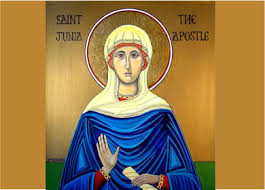
The apostle Junia(16:7)
Was there a woman apostle? That is how some interpret this verse and use it to justify a more active role for women in the church.
Some translators were so upset at the idea of a woman apostle that they replaced "Junia" with "Junias." The problem with this is that although "Junia" was a common woman's name at that time, there is no evidence for "Junias" as a man's name.
Bart D. Ehrman, Misquoting Jesus (2005), p.185